
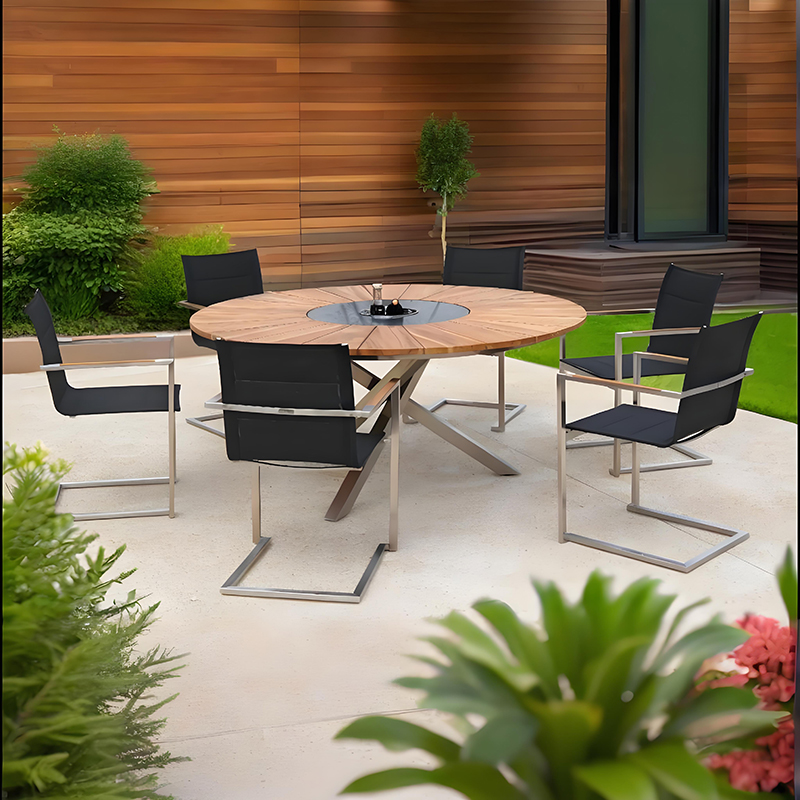
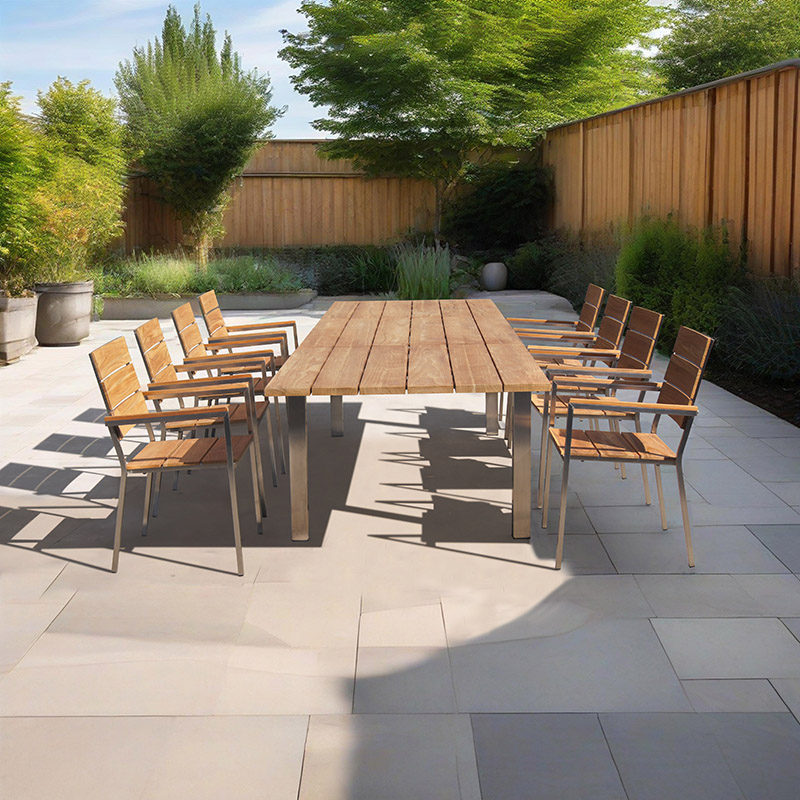
Whether an outdoor stainless steel table or a garden stainless steel table will remain beautiful and functional depends heavily on the grade of stainless steel, your local environment, and how you maintain it. Let’s break this down in detail.
Understanding Stainless Steel Grades
Not all stainless steel is created equal. The term “stainless” means it stains less than ordinary steel, not that it is impervious to all environmental attack.
Grade 304 (Common “18/8” or “18/10”) : This is the most common stainless steel used for indoor kitchenware, countertops, and many outdoor tables. It contains 18% chromium and 8% nickel. The chromium forms a passive oxide layer that resists corrosion. However, Grade 304 is only moderately resistant to chlorides (salt). In a coastal area with salt spray, or if exposed to de-icing salts or certain chemicals, 304 can develop pitting rust (pitting corrosion) within months or even weeks.
Grade 316 (Marine Grade): This contains 16% chromium, 10% nickel, and 2% molybdenum. The molybdenum dramatically improves resistance to chlorides and acids. A garden stainless steel table made from 316 is truly suited for full-time outdoor exposure, even near the ocean. It is far more expensive but is the correct choice for permanent outdoor placement.
Grade 430 (Ferritic): This is a cheaper, magnetic stainless with lower corrosion resistance. It should never be left outside permanently if you want it to look good.
Key Factors That Determine Success Outdoors
Chlorides (Salt): The single biggest enemy. Even 304 will eventually rust if you live within a few miles of the coast. Swimming pool chemicals, saline irrigation, or road salt carried by wind will attack the passive layer.
Pollution & Acidity: Industrial areas with acid rain can accelerate corrosion. Bird droppings (highly acidic), tree sap, pollen, and hard water spots can also stain or etch the surface if left for weeks.
Oxygen Availability: Stainless steel needs oxygen to maintain its protective oxide layer. If you leave a wet cloth, a wet leaf, or a puddle of standing water on the table for days, the area underneath becomes oxygen-deprived, and crevice corrosion can begin.
Mechanical Damage: Scratches from garden tools, falling branches, or abrasive cleaners can break the passive layer, providing a start point for rust.
What Will Happen Over Time?
Short term (weeks to a few months): A high-quality outdoor stainless steel table (316 grade) will look nearly new. A 304 table may show small brown specks (surface rust) if you live near salt or after heavy rain followed by drying.
Medium term (1–3 years): A 304 table will likely develop widespread pitting, especially on horizontal surfaces where water sits. The underside and legs (where dirt accumulates) may show rust streaks. A 316 table may only show slight dulling or minor spotting if not cleaned.
Long term (5+ years): A 304 table left fully exposed will look aged, with rough rust spots. It can still be functional but cosmetically compromised. A 316 table will remain largely rust-free, though it may lose some original luster.
Can You Minimize Damage? Yes – Maintenance is Key
If you already own a 304 garden table or choose to use one outside, here is how to extend its life:
Regular Cleaning: Wash with mild dish soap, warm water, and a soft cloth every 1–2 weeks. Never use steel wool or abrasive pads (they can embed iron particles that rust). Rinse thoroughly to remove all soap residue.
Remove Contaminants Promptly: Wipe off bird droppings, tree sap, pollen, and standing water immediately. Do not leave wet towels, magazines, or plant pots on the surface for more than a day.
Passivation: You can buy a stainless steel passivation gel or spray (often citric or nitric acid based) and apply it once or twice a year. This removes free iron from the surface and restores the oxide layer.
Cover It: The single best practice for any outdoor table not made of 316 is to use a waterproof, breathable cover when not in use. This stops rain, leaves, and pollution from contacting the metal.
Elevate and Ventilate: Ensure the feet are on plastic or rubber pads, not directly on wet concrete or soil. Allow air circulation underneath.
When NOT to Leave a Stainless Steel Table Outside
If it’s cheap, magnetic stainless (430 series) – it will rust heavily in months.
If you live in a coastal or high-salt environment and the table is not 316 grade.
If you want a “zero maintenance” surface – even 316 needs occasional cleaning to prevent surface staining.
If the table has welded joints that were not properly cleaned – weld areas are often the first to rust because the heat treatment destroys corrosion resistance locally unless the table is “solution annealed” and passivated after welding.
Alternatives to Permanent Outdoor Placement
If you do not want to worry about rust, pitting, or regular cleaning:
Consider an aluminum or teak garden table – aluminum forms a protective oxide instantly and never rusts; teak is naturally oily and weather-resistant.
Use your stainless steel table as a portable outdoor table – keep it on a covered patio, bring it indoors during winter or rainy seasons, and only place it in the garden for parties or specific use.
Summary Table for Quick Reference
| Grade | Suitable for Permanent Outdoor? | Coastal Area? | Maintenance Needed |
|---|---|---|---|
| 430 | No | No | Constant (or don’t bother) |
| 304 | Only in dry, inland, low-pollution areas | Not recommended | High (cover, clean weekly) |
| 316 | Yes | Yes | Low (clean monthly, passivate annually) |
Final Verdict
Yes, you can leave a stainless steel table outside – if it is Grade 316 (marine grade) and you live in a typical inland or suburban environment. For most standard garden stainless steel tables sold at general home stores (often 304), permanent outdoor exposure will lead to cosmetic rust within 1–3 years. To keep it looking its best, treat it as a “part-time outdoor table”: use a cover, clean regularly, and avoid direct contact with salt, acids, and standing moisture. If absolute zero-maintenance outdoor furniture is your goal, choose a different material like HDPE plastic, powder-coated aluminum, or teak. But for a modern, sleek look that can survive outdoors with care, 316 stainless steel is a durable and attractive choice.


