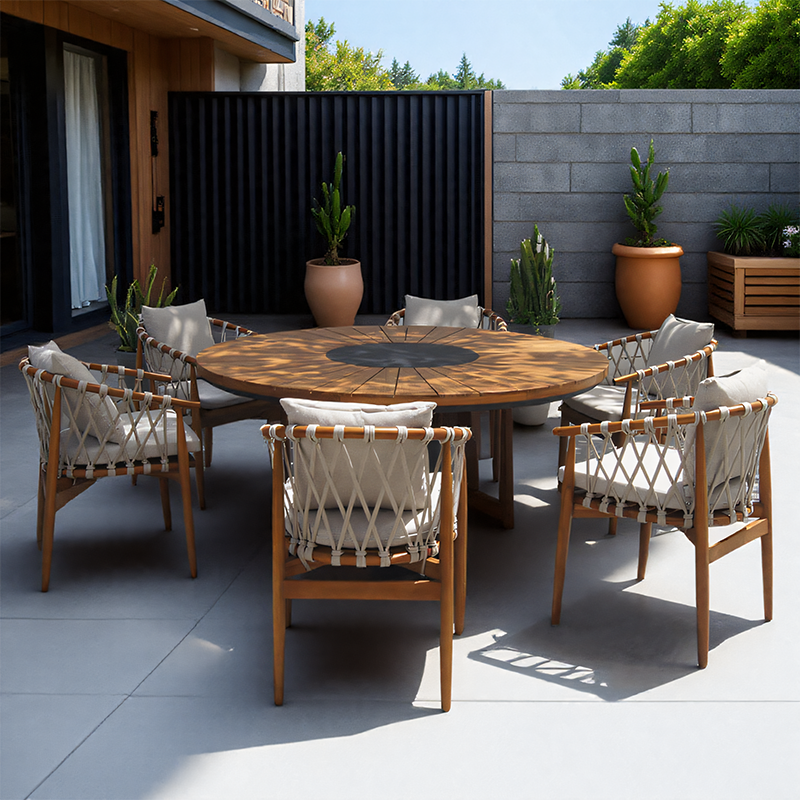
Application Guide and Precautions for Outdoor Furniture
Outdoor furniture is not only an extension of living space but also an important medium for modern people to pursue a quality lifestyle. In places such as balconies, gardens, and terraces, it creates a close dialogue between people and nature, allowing family meals, gatherings with friends, personal reading, or meditation to take place in the breeze and sunlight, greatly enhancing the sense of happiness and ritual in daily life.
Its significance lies in the fact that high-quality outdoor furniture can create a 'second living room', effectively expanding the actual living area. For families living in limited urban spaces, this means a precious place to breathe. It encourages people to step out of enclosed indoor spaces and participate more in outdoor activities, promoting physical and mental health and deepening emotional connections among family and friends. At the same time, a well-maintained outdoor space significantly enhances both the aesthetic and practical value of a property.
Therefore, wisely choosing and maintaining outdoor furniture concerns not only the durability of the furniture itself but also represents a long-term investment in a healthy lifestyle, family social life, and asset value. It allows the home to go beyond four walls, integrating life into a broader world.

1. Consider the weather and climate
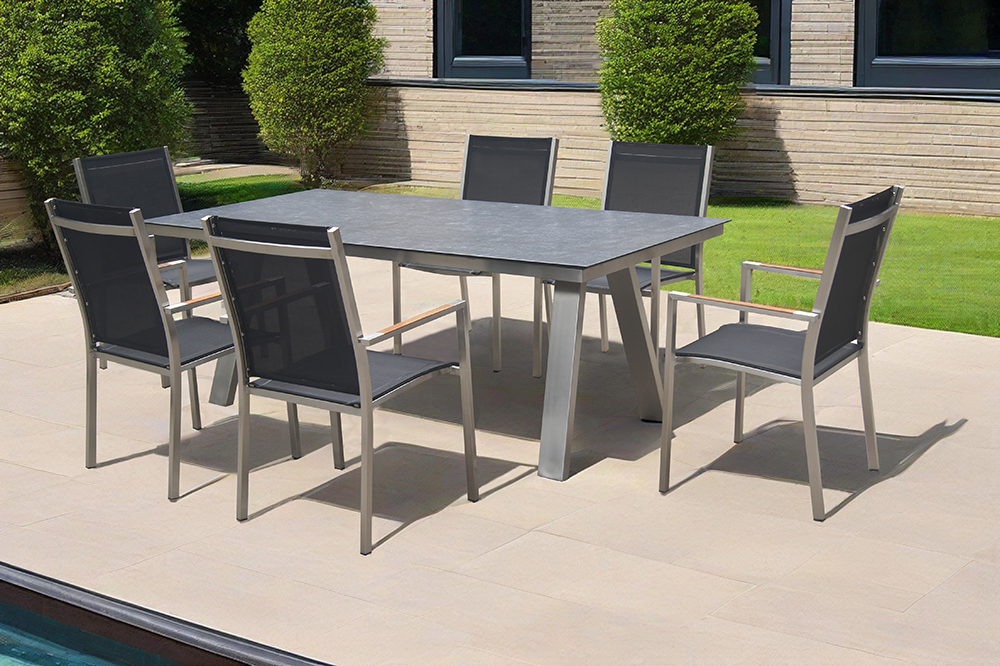
Consider the weather in the area where you live. Does it rain frequently? Or is it tropical, humid and hot? Direct sunlight can cause wooden furniture to crack, while metal furniture can become uncomfortably hot under the sun. If you live in an area prone to tropical storms, severe convective weather, or near the coast, sudden strong winds can even overturn very light furniture made of aluminium or plastic.
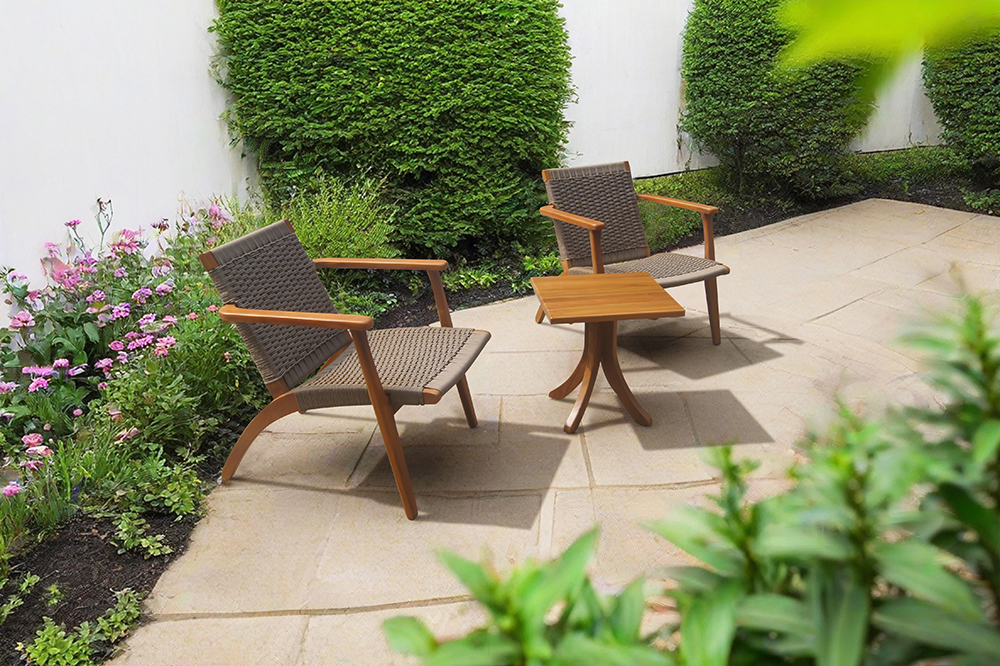
2.Choose Styles and Materials Based on Placement
Does your outdoor area have a canopy or shade? Will the furniture be placed on soft grass or hard ground? Remember: if placed on grass, avoid furniture with softwood frames, as softwood absorbs moisture and can lead to frame damage. Instead, opt for materials like plastic or steel. If the furniture is exposed to direct sunlight, it’s best to use a sun umbrella, as intense sun can harm both the furniture and your skin. The material of outdoor furniture is crucial—it determines long-term maintenance. So don’t choose based on looks alone. Aluminum and resin are the easiest to maintain, while wicker or wooden furniture requires regular upkeep.
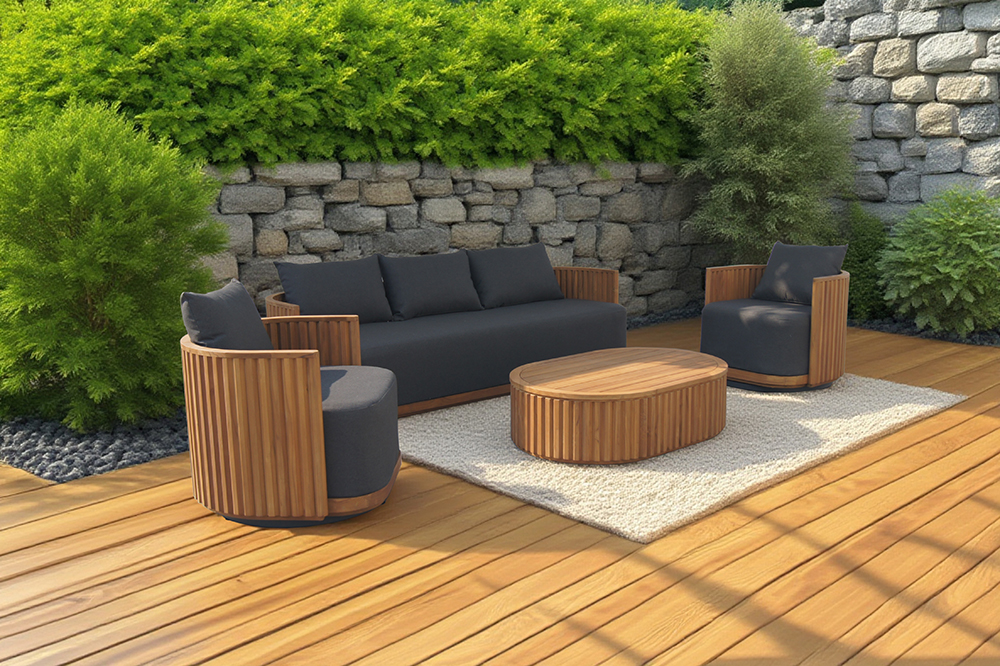
3.Use rugs locally
Localised rugs provide good decorative effects, especially when room functions are not clearly defined. Rugs that are suitable for outdoor use should be looked for; they look like natural fibres but are made of synthetic fibres, resistant to UV exposure and humidity.
4.Outdoor furniture maintenance
For furniture that is sensitive to sunlight, it is best to cover it with a protective cover if not in use for two to three weeks. Most wood used for outdoor furniture can resist natural corrosion, but in summer, avoid prolonged exposure to sun and consider storage and shading for protection.
Hardwood furniture may benefit from sanding once a year and reapplying a protective layer of oil, stain, or polyurethane. Wash rattan products with a hose every few weeks to prevent dust accumulation in the crevices. Regularly wiping off dust, debris, and excess water from wooden furniture is the best way to protect it. For metal furniture, it is recommended to apply a rust-preventive primer followed by rust-resistant paint and avoid cleaning agents containing ammonia, trisodium phosphate, or similar chemicals which may react with the metal.