
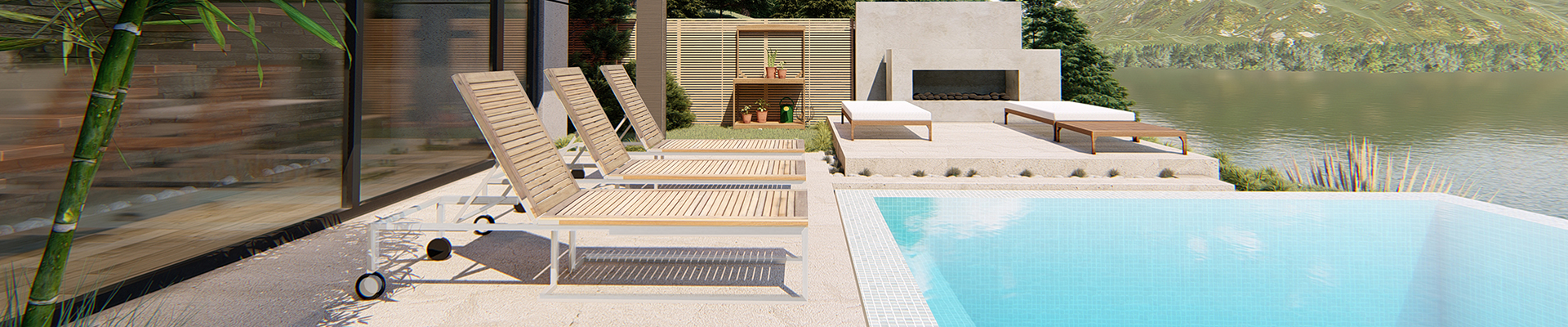
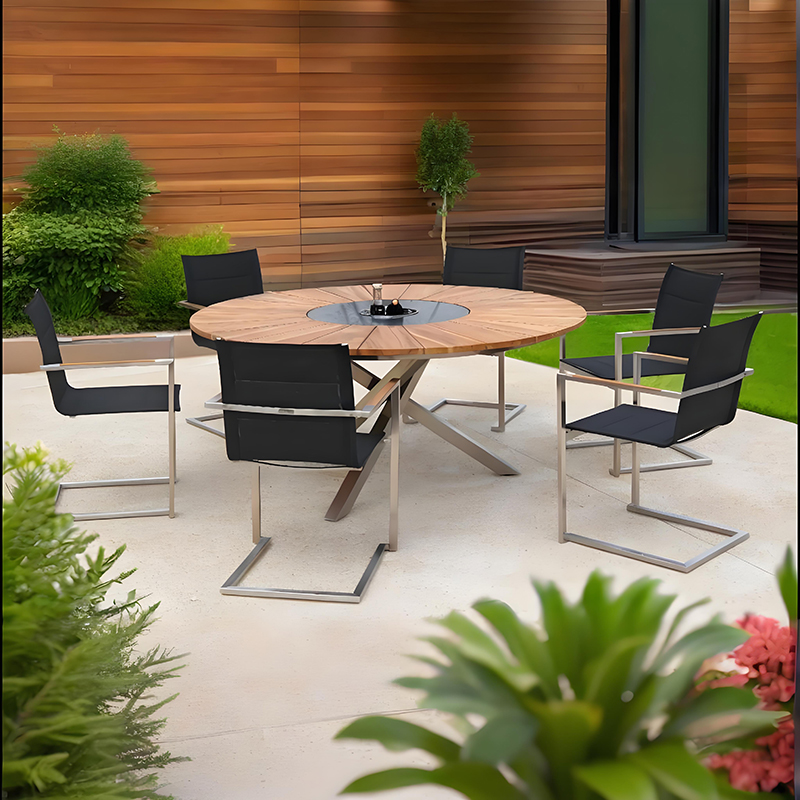
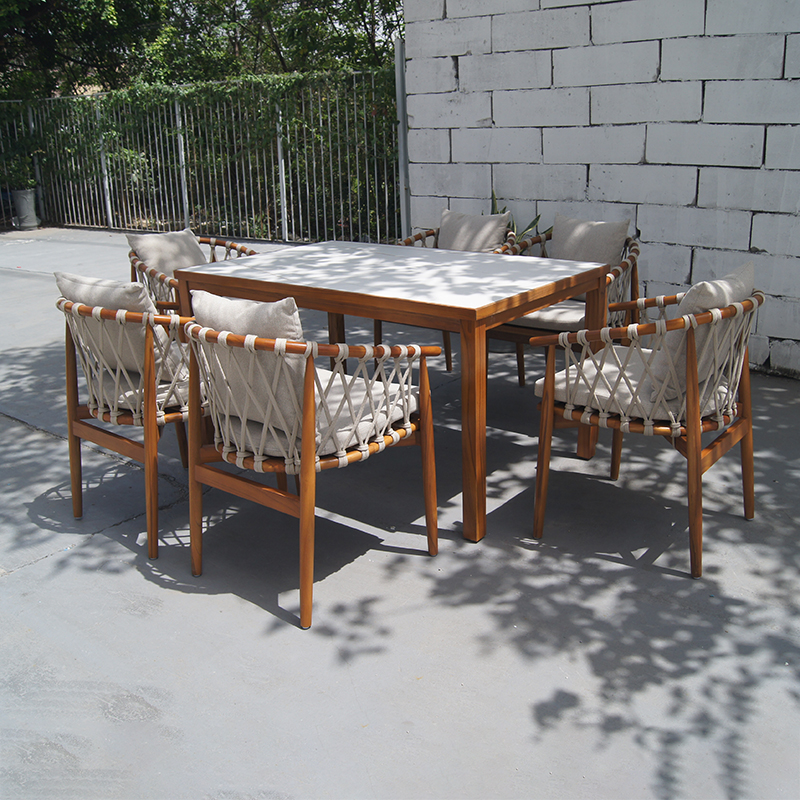
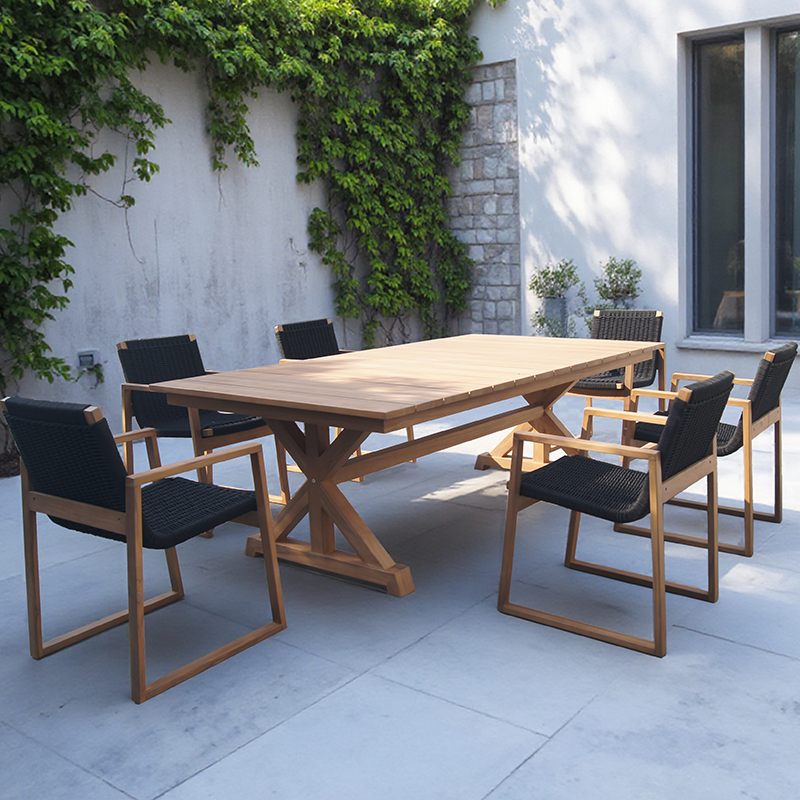
When choosing the best material for outdoor tables, the answer depends entirely on your climate, maintenance preferences, and style. However, if you demand a single “best” — one that balances longevity, beauty, low maintenance, and structural integrity — the winner is Teak.
Below is a detailed comparison of the top contenders, with a special focus on why the teak table and outdoor teak table consistently outperform other materials for most homeowners.
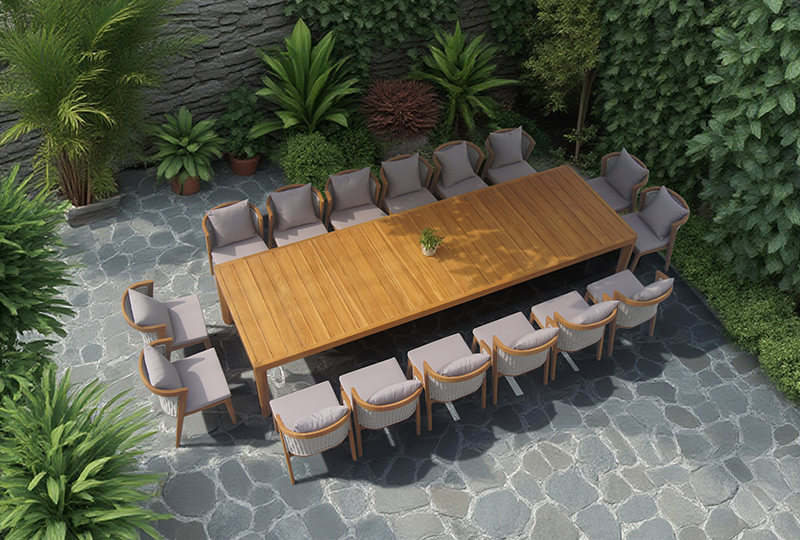
1. Teak Wood – The Gold Standard
For centuries, shipbuilders and furniture makers have agreed: teak is the ultimate outdoor hardwood. An outdoor teak table is not merely “good” for outdoors; it was biologically designed for it.
Why it is the best:
Natural Waterproofing: As noted earlier, teak contains dense natural oils and silica. A teak table left in rain, snow, or coastal salt spray will not rot, warp, or split.
No Sealing Needed: Unlike almost every other wood, teak requires no varnish, epoxy, or paint. It weathers to a beautiful silver-gray patina that is purely cosmetic.
Heat Resistance: Place a hot pizza pan or a steaming cup of coffee directly on a teak table — it will not melt or discolor like plastic or some composites.
Repairable: Scratches or stains can be sanded out. You cannot do that with powder-coated metal or plastic.
The only downside: Initial cost. A solid outdoor teak table is more expensive than ordinary pine or plastic. But a well-made teak table will outlast three cheaper tables.
Verdict: Best for anyone who wants a lifetime table with zero rust, no peeling finish, and natural beauty.
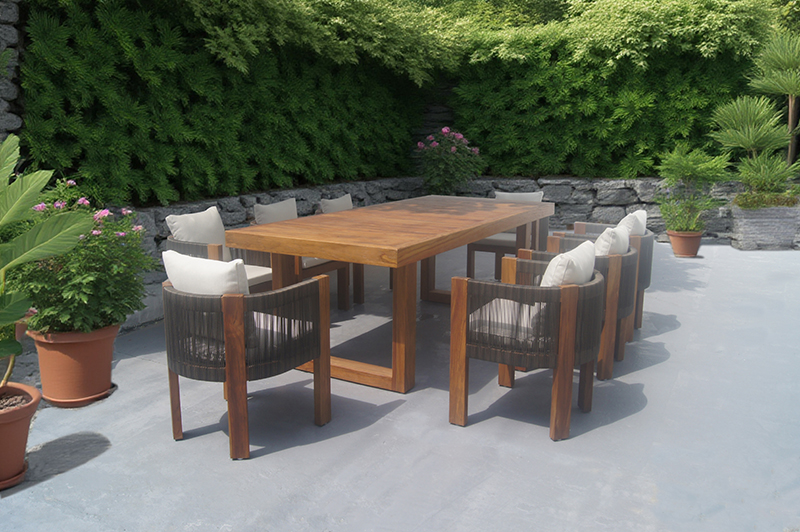
2. Outdoor Stainless Steel Table – The Industrial Alternative
An outdoor stainless steel table is the top choice for commercial kitchens, grilling stations, and modern minimalist patios. However, it has critical limitations for general dining use.
Advantages:
Truly Waterproof & Hygienic: Stainless steel (especially grade 316, also called marine-grade) is immune to water. It will not rust, crack, or absorb liquids. It is easy to sanitize.
Extremely Strong: Can hold very heavy objects without flexing.
Fireproof: Perfect for placing a grill or fire pit accessory.
Disadvantages for everyday outdoor tables:
Glare & Heat: In direct sun, a stainless steel table becomes blindingly reflective and burning hot to the touch (unlike wood).
Scratches & Dents: It shows every fingerprint, scratch, and ding. Over time, an outdoor stainless steel table used for dining looks worn and industrial, not warm or inviting.
Noise: Placing plates, glasses, or cutlery on stainless steel is loud and metallic.
Condensation: On cool mornings, moisture condenses on the metal surface, wetting napkins and book pages.
Verdict: Best for outdoor kitchens or BBQ prep areas. Not recommended for a family dining teak table replacement.
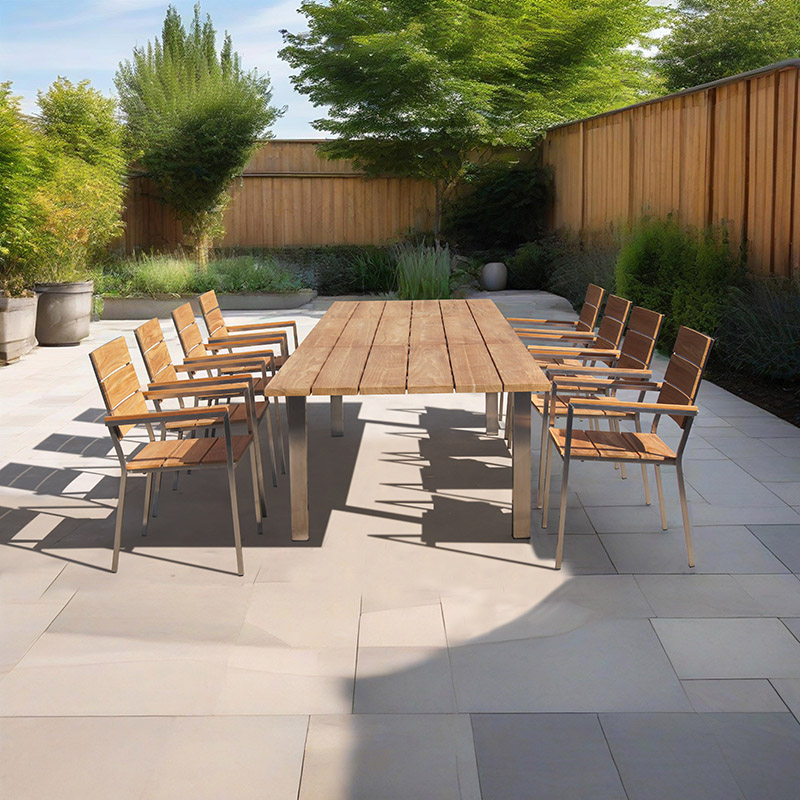
3. Other Common Materials (Quick Comparison)
To justify why teak and stainless steel lead the category, here is how other options fail:
Plastic / Resin Wicker: Cheap and waterproof, but becomes brittle in UV light (cracks in 3-5 years). Lightweight — a strong wind will flip your table. Cannot be repaired.
Aluminum: Lightweight and rust-proof. However, it conducts heat/cold severely. Paint or powder coating will eventually peel, looking ugly. Hollow aluminum feels cheap and noisy.
Concrete: Extremely durable but porous (needs sealing every 1-2 years). It cracks with ground movement. It weighs hundreds of pounds — impossible to move for cleaning or rearranging.
Pine / Cedar / Fir: These softwoods rot within 2-4 years unless constantly painted or sealed. They are not in the same league as a outdoor teak table.
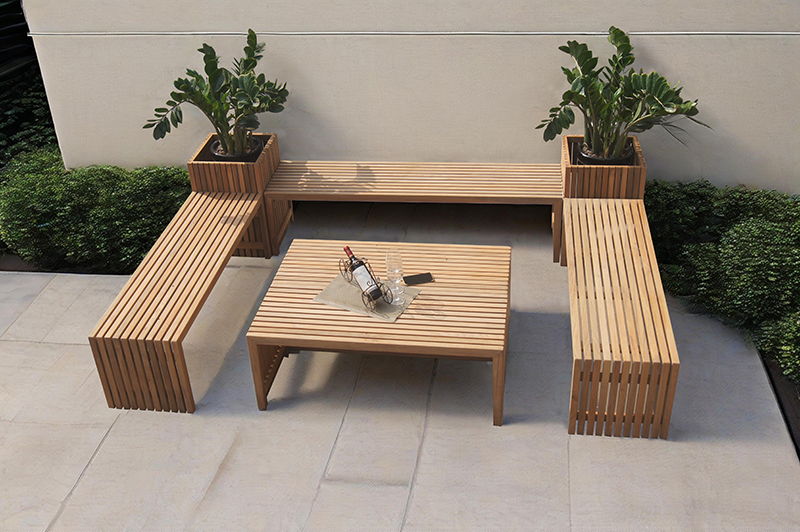
4. Direct Head-to-Head: Teak Table vs. Outdoor Stainless Steel Table
| Feature | Teak Table | Outdoor Stainless Steel Table |
|---|---|---|
| Water resistance | Excellent (natural oils) | Perfect (if 316 grade) |
| Comfort to touch | Warm, natural | Hot in sun, cold in shade |
| Noise level | Quiet | Loud metallic ring |
| Appearance over time | Beautiful silver patina | Scratches, fingerprints, dents |
| Repairability | Sand out scratches | Cannot un-dent metal |
| Best use | Dining, lounging, coffee | Grilling prep, bar tops |
| Price for similar size | High | Medium to high |
5. How to Choose the Best Material for Your Outdoor Tables
Ask yourself three questions:
What is the primary activity?
Family meals, reading coffee, board games → Teak table.
Butchering meat, washing fish, placing hot griddles → Outdoor stainless steel table.
What is your climate?
Humid, rainy, coastal (salt air) → Teak is superior. Salt air corrodes lower-grade stainless steel.
Extremely dry desert → Teak still works; stainless steel becomes too hot to touch.
How much maintenance do you want?
Zero maintenance: Leave teak raw to turn silver.
Wash with soap and water: Both are fine.
Avoid sanding or repainting: Teak never needs paint; stainless steel never needs paint. But stainless steel needs constant wiping to look clean.
6. The Final Answer
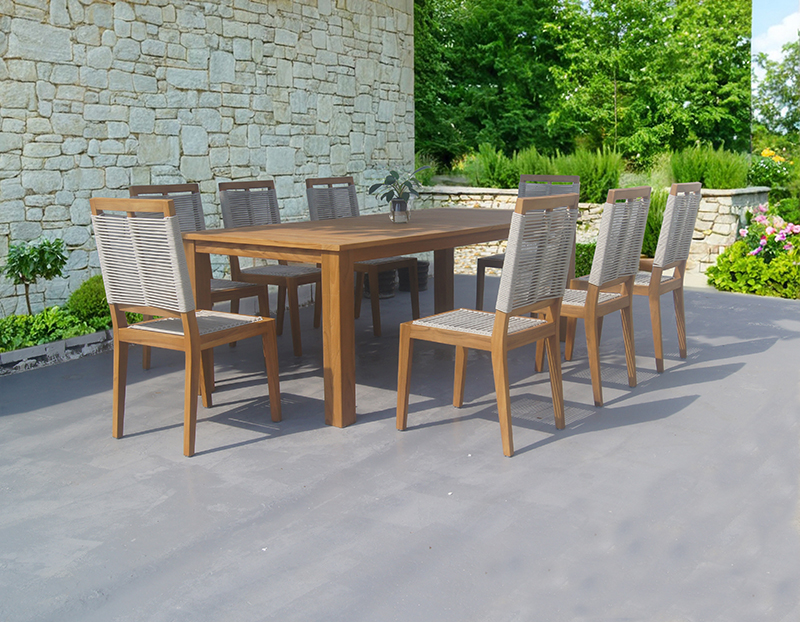
If you want one outdoor table that does everything well — dining, relaxing, entertaining — with the least hassle over 20+ years, buy an outdoor teak table.
Teak is the only material that is naturally waterproof, UV-stable, comfortable to touch, quiet, repairable, and beautiful without any chemical treatment. The outdoor stainless steel table is a specialized tool for cooking prep, not a general replacement for a warm, welcoming dining surface.
For 99% of homeowners looking for the best material for outdoor tables, teak remains the undisputed champion. It is not the cheapest upfront, but it is the cheapest over time, because you will buy it once — and your grandchildren will still be using it.
