

Six Key Factors and Practical Advice Before Buying Garden Furniture
1. Space Measurement and Layout Planning
Take Precise Measurements: Measure not only length and width but also note the terrain, slopes, and the
location of fixed features (like trees, flower beds, water taps).
Functional Circulation: Ensure at least 60-80 cm of walking space remains after furniture placement to avoid
a crowded feeling.
Visual Proportion: Furniture size should be proportionate to the space. Avoid bulky large sets in small yards;
opt for lightweight, airy designs (like wrought iron, rattan) to enhance the sense of space.
Create a Mock Layout: Use tape or cardboard on the ground to simulate furniture dimensions and experience
the spatial effect firsthand.
2. Define Primary Use and Scenarios
Social Dining Focus: Prioritize a sufficiently large table and chairs (at least 60cm width per person), with
easy-to-clean materials (like aluminum alloy, waterproof wood + cushions).
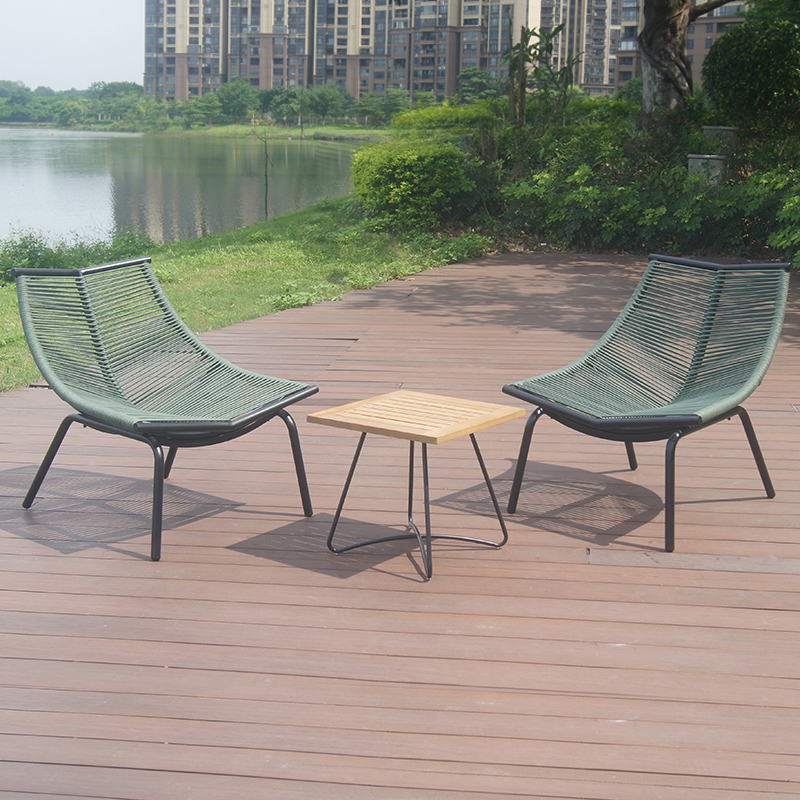
Relaxation & Lounging Focus: Consider lounge chairs, hammocks, swing chairs, modular sofa sets, paired
with side tables for drinks.
Multi-Purpose Needs: Choose foldable, movable furniture (like coffee tables with wheels) or height-
adjustable tables (for dining/work dual use).
3. Assess Climate Adaptability
Weather Resistance is Key:
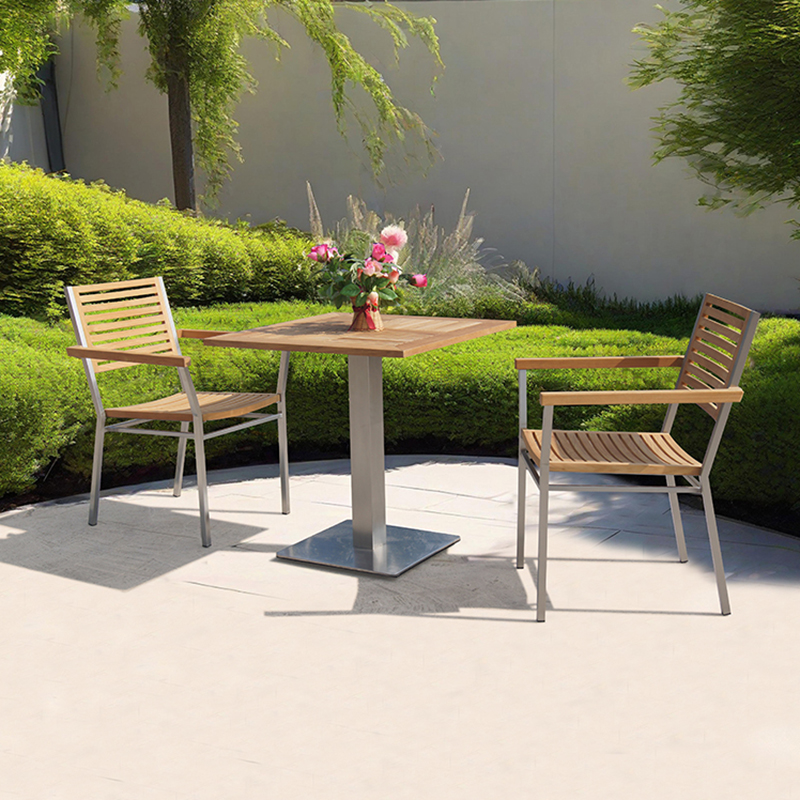
Humid/Rainy Climates: Prefer rust-resistant materials (e.g., aluminum alloy, stainless steel, PE rattan).
Avoid solid wood (unless it's oily wood like teak or eucalyptus) or ordinary steel.
Intense Sunlight Areas: Choose UV-resistant materials. Avoid plastics that fade easily; metal parts may get
hot—consider adding a sun umbrella or awning.
Windy Areas: Opt for heavier or anchorable furniture. Avoid lightweight aluminum and stackable chairs that
may tip over.
Temperature Adaptability: Metal can be cold in winter and hot in summer; pair with thick cushions. Wood
offers a touch but requires maintenance.
4. Furniture Style and Color Coordination
Harmonize with the Environment:
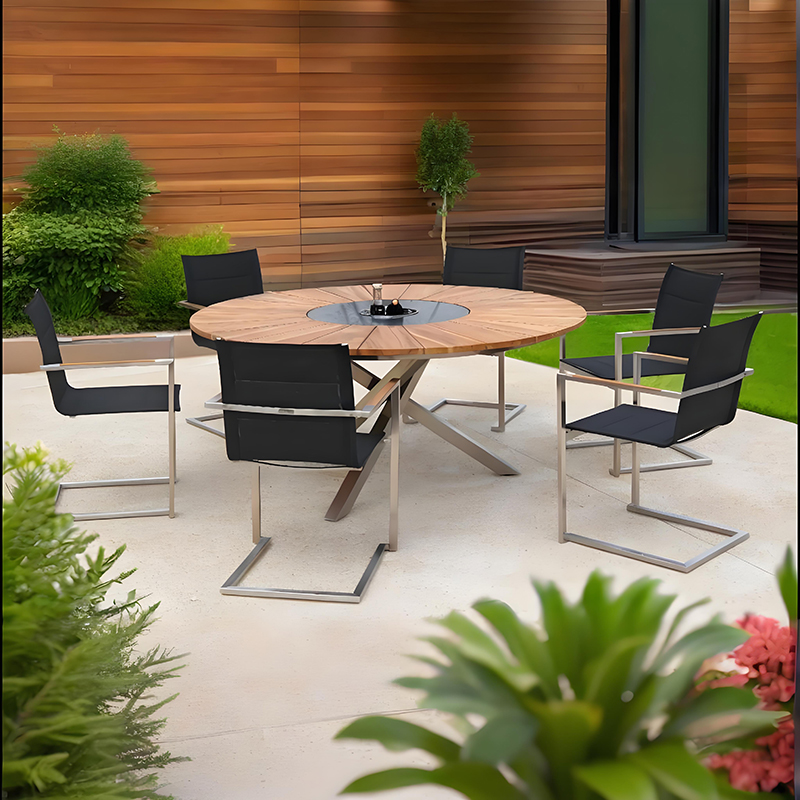
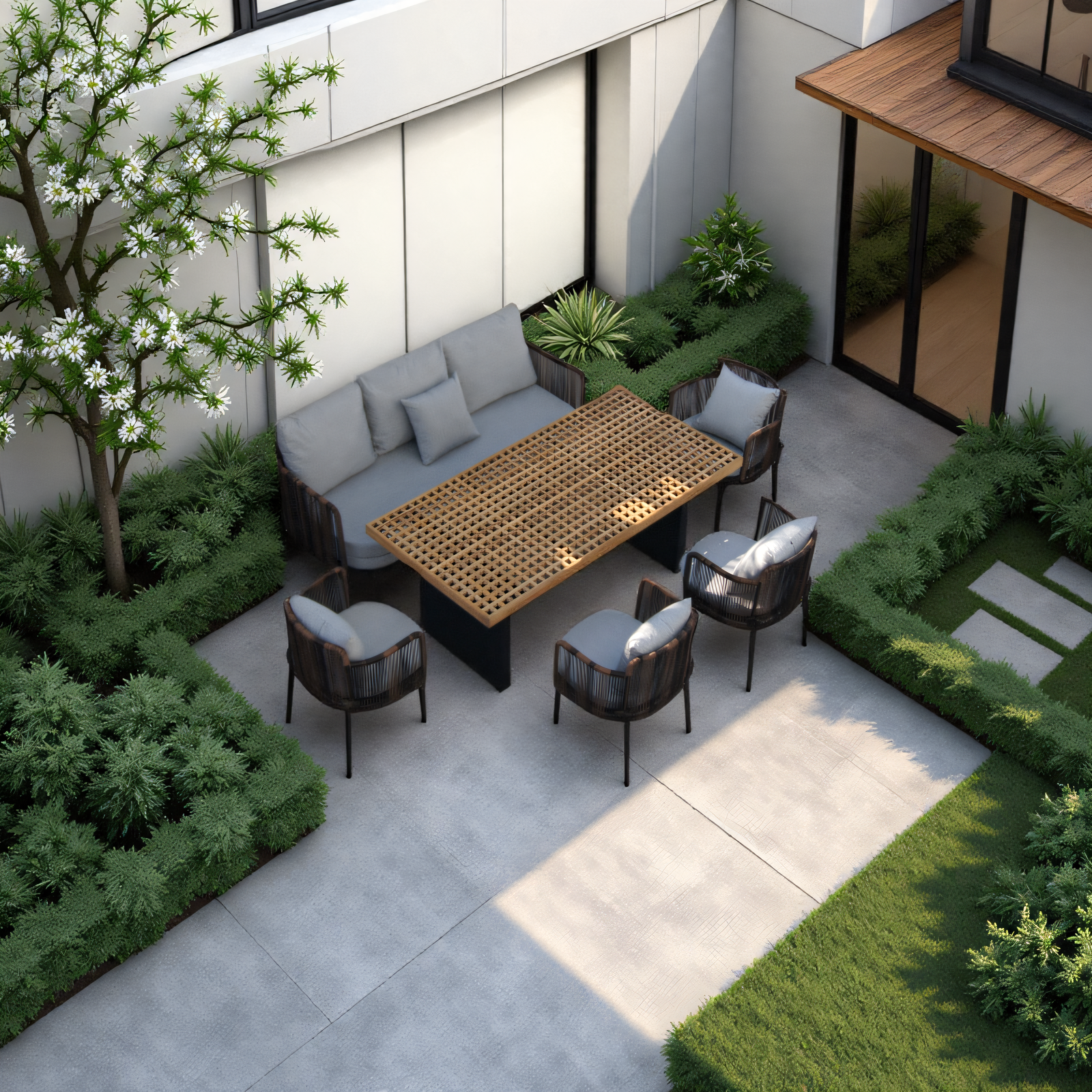
Modern Minimalist: Clean-lined metal/concrete materials, neutral colors (black, white, gray).
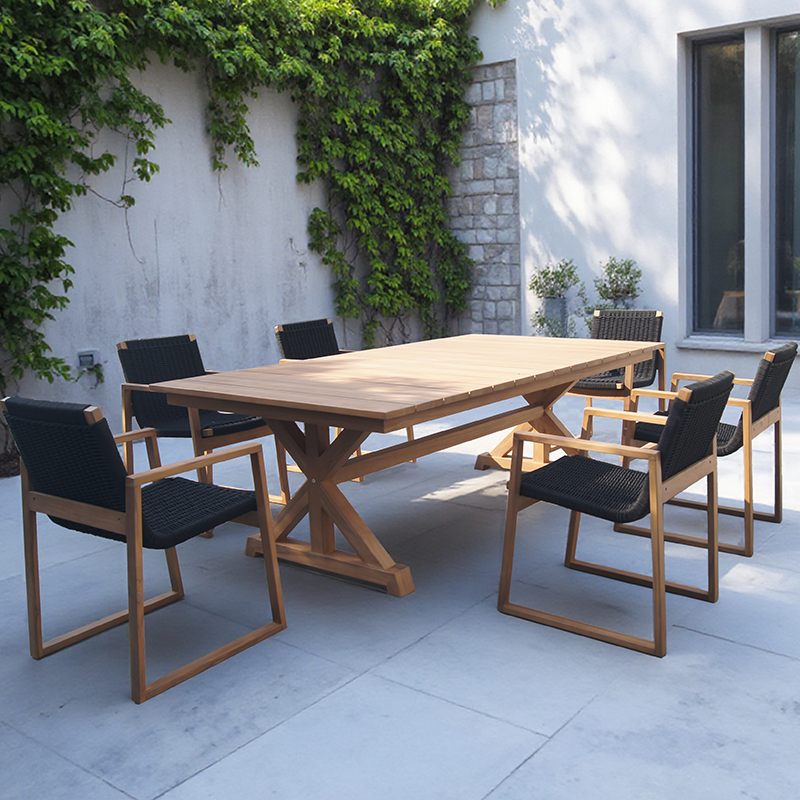
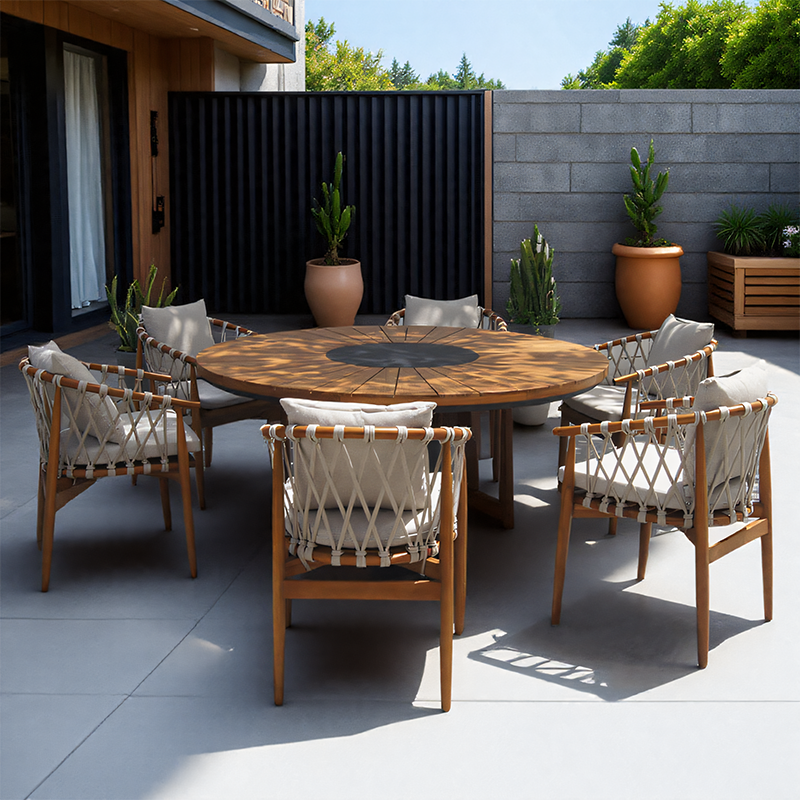
Natural/Rustic: Wood, wicker/rattan, paired with textiles in beige, earth tones, greens.
Coastal/Resort Style: Aluminum or resin wicker furniture in white, blue tones.
Add Personal Accents: Introduce color and layers through cushions, umbrellas, outdoor rugs, planters.
These are also easy to change with the seasons.

5. Budget and Full-Cycle Costs
Initial Budget Range:
Economical (~US$100-300): Resin plastic, lightweight steel. Suitable for occasional use.
Mid-Range (~US$300-1200): Aluminum alloy, high-quality PE rattan, treated wood. Balances durability and
aesthetics.
High-End (US$1200+): Teak, stainless steel, designer brands. Focus on material, craftsmanship, and long-term
value.
Hidden Costs:
Maintenance: Regular oiling for wood, purchasing waterproof covers for cushions.
Accessories: Sun umbrellas, cushions, protective covers, storage boxes.
Replacement Cost: Inexpensive furniture may need replacing in 3-5 years, while quality furniture can last
10+ years.
6. Storage and Maintenance Convenience
Winter Storage:
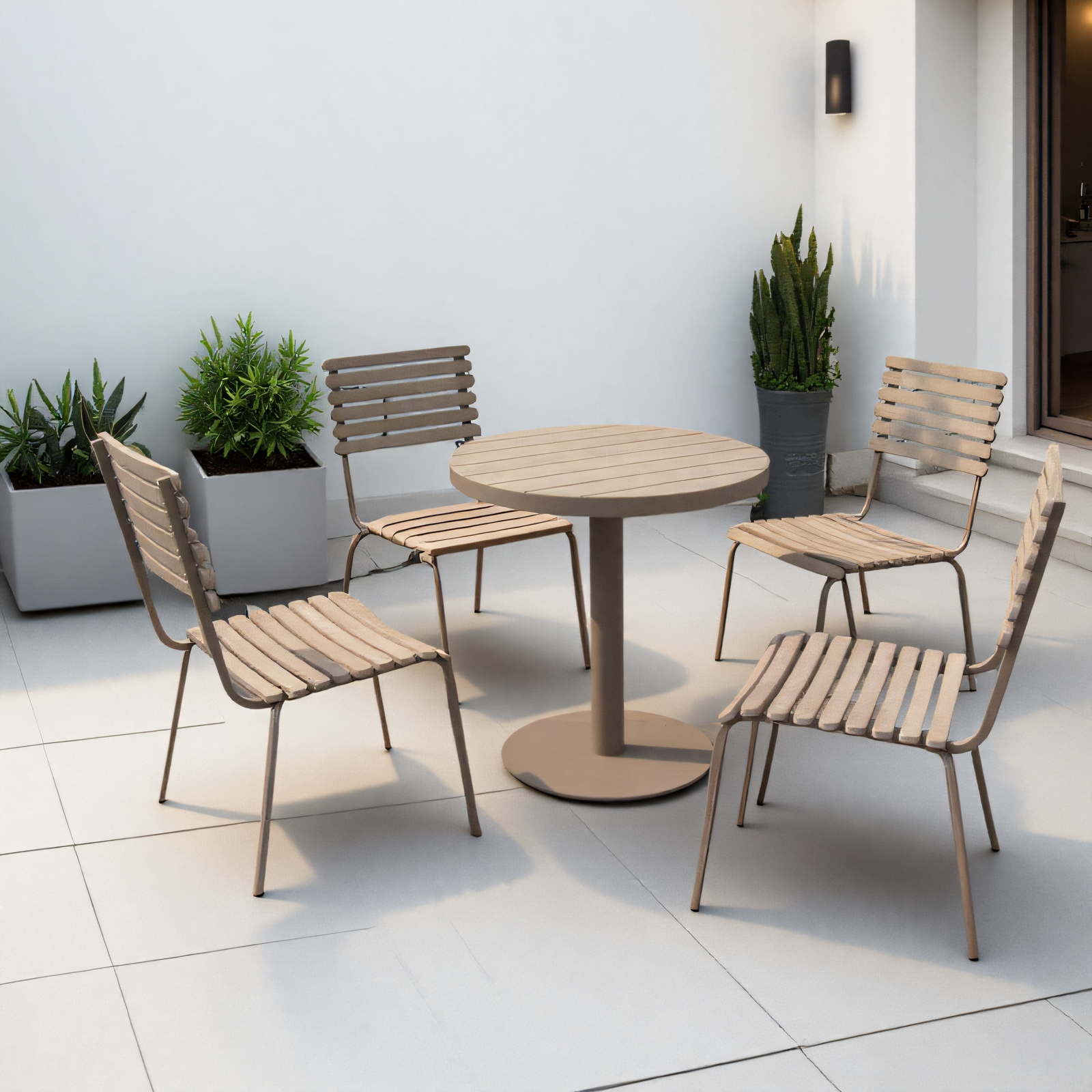
Limited Space: Prioritize foldable, stackable, modular designs.
Indoor Storage: Always bring cushions, textiles, etc., indoors during rainy seasons and winter.
Outdoor Protection:
Protective Covers: Buy purpose-designed, windproof, and waterproof covers that are also breathable to
prevent mold.
Storage Benches/Sheds: Offer seating and storage, useful for temporary cushion and tool storage.
Easy Cleaning: Choose designs with smooth surfaces and few crevices. Avoid complex weaves that trap dust
and are hard to clean.

Final Pre-Purchase Checklist
I have taken precise measurements and planned the layout, ensuring good circulation.
I have defined the primary purpose of the furniture (dining/relaxation/multi-use).
The materials I've chosen are suitable for the local climate (sun/rain/temperature swings).
The furniture style and colors harmonize with the garden and house architecture.
My budget includes the furniture, accessories, and annual maintenance costs.
I have suitable storage space or have planned to buy protective covers.

Additional Tip: If possible, try sitting on the furniture in a store to assess comfort and stability. When buying
online, carefully read material descriptions and user reviews, especially regarding weather resistance.
By systematically considering these factors, you can select not only beautiful and comfortable furniture but
also make a wise, long-term investment, truly transforming your garden into an outdoor oasis.
